
Sep 9
/
Dr. Harris Baden MD, Co-Founder & CEO @ Ripple Health
When it Really Matters
Like many little boys, I wanted to be like my dad. I liked the idea that he was a doctor and that he helped people. I liked how I felt special when I went to see him at the hospital because he was my dad. As I got older, I noticed the admiration my friends’ parents had for him, even if they hadn’t ever met him in person.
I knew I wanted to be a doctor, too. I didn’t have a special interest in science, per se, even in college, but I got good grades so my path to medical school felt inevitable. Honestly, I never really even thought that much about why I wanted to be a doctor, or what it meant to be a doctor. Even in the first two years of medical school, when we were almost exclusively in the classroom or anatomy lab, I merely did the work as a means to an end. It was interesting to me, but I felt a bit like a pretender because I wasn’t passionate about the material the way my classmates were. I just consumed the facts and answered the questions on the many exams.
It wasn’t until I entered the clinical environment that I realized what it meant to be a doctor. To be face-to-face with people who were sick or injured. To witness their pain and to recognize their fear. To grasp the significance of the role I was stepping into and the privileged intimacy that came with caring for others in need. It is embarrassing to admit that I was surprised. It hit me in a way that it shouldn’t have, because of course I should have known, yet, it was only then that I realized that I had stumbled upon a meaningful path for my life.
I liked the constant buzz of activity, even at 3 o'clock in the morning. I reveled in the responsibility and the solemnity of the work. I enjoyed the interactions with folks in all the different roles: nurses, technicians, support services, physicians, surgeons, unit clerks, security guards… I loved the people part of medicine.
Inevitably, I had experiences that shook and even frightened me. I remember calling my father one night from the pediatric burn unit when I was a medical student, overcome by the tragedy and brutality before me. “I don’t think I can do this,” I admitted. His response was simple but profound, “Just imagine how scary it is for the child and their family, and how desperately they want your help. That is when it really matters.” His words have buoyed me in countless moments throughout my career.
While I found my area of fascination in the physiology and practice of pediatric cardiac critical care, it is still the interactions with patients, their families, and my teammates that fill my cup. My memories are of people and moments, not cases and procedures.
I understand that how I interact with my patients and my teammates is not just important because of how it makes them feel, but also because of the impact it has on clinical outcomes - the quality, safety, and solicitude of the care. I am convinced that “how we do” is as important as “what we do”.
The transactional aspects of care are assumed by our patients; they expect that we will give them the right care, and safely. No extra credit is given for getting it right. What stand out are the relational moments. Do we listen to our patients and their loved ones? Do we recognize and validate their experiences and concerns? Do we seek to understand not only the physical manifestations of their ailments, but also the emotional and the functional? Do we really see them, and do we convey that we care? They expect us to care for them, but they want us to care about them, as well.
These relational aspects of care are not just “nice to have”, but are key drivers of every measure of our performance as clinicians and as organizations. When we listen, we are more likely to get it right. When we don’t listen, we are more likely to be ineffective, inefficient, and error-prone.
The same is true of our interactions with our co-workers. When we feel seen, heard, and appreciated, we are more effective, efficient, and satisfied. When we feel like a cog in a wheel, we are prone to disengagement, dissatisfaction, and to mistakes.
The good news is that we are individually and collectively in control of this facet of healthcare delivery. We may not be able to predict or control the pathophysiology we encounter, but we can control the way we engage with our patients and with each other. As leaders, we can model the behaviors we want our teams to embrace with each other and with the patients we all serve. Curiosity and empathy. Patience and humility. Sensitivity and civility. Intimacy and candor. Respect and appreciation. Kindness and grace. These are things we can deliver with intention and with consistency.
I became a doctor almost purely by circumstance. I have thrived as a doctor because of the meaning and fulfillment I have derived from the humanity of the work. I have learned from and benefitted from the passion and expertise and skills of the teammates I have worked alongside. I have leaned into the frailty and the precariousness of the human condition in a way that has lifted me up, not beaten me down. I have embraced the privilege and intimacy of bearing witness to and caring for others who are suffering. I have done so with a community of quiet heroes who have shown me what courage and bravery and commitment and compassion really look like. Now, as my son embarks on his medical career, I hope he too will discover and be nourished by the sacredness, honor and meaningfulness of the burdens and the rewards.
Healthcare is people caring for, and about, people.
The Ripple Health AI team is deeply saddened by the loss of Dr. Melvin Baden, who passed away on August 18, 2026. Father to our co-founder and CEO, Dr. Baden dedicated his life to his family and a distinguished career in pediatric medicine, impacting countless lives. We extend our warmest thoughts, sympathies, and support to Harris and his family.
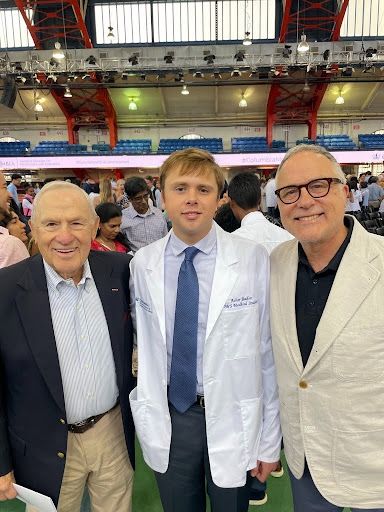
Photo: Dr. Melvin Baden, Asher Baden, Dr. Harris Baden at Asher’s White Coat Ceremony, 2023

Copyright © 2026
Company
-
Home
-
Physicians & APPs
-
Nursing Professionals
-
Solution
-
About
-
Insights
-
Case Studies
-
Contact
Social
Ripple Health AI’s courses are jointly provided by the Washington State Medical Association for physician CME credits and approved by the Colorado Nurses Association for nursing contact hours.